Mastering lead acquisition for tree services demands surgical precision, transforming your approach from a volume game into strategic capacity deployment.
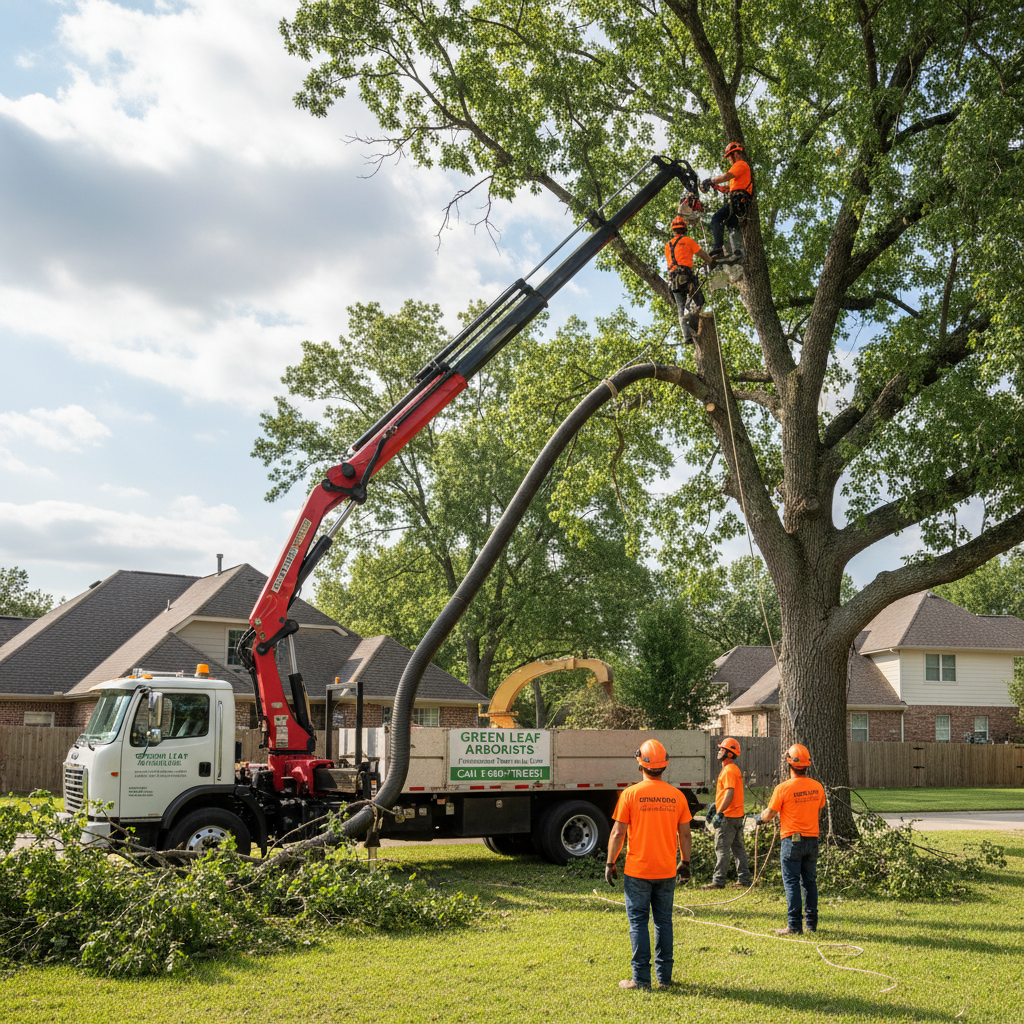
Running a tree service operation demands more than just skill with a chainsaw; it requires surgical precision in lead acquisition to protect your crew utilization and bottom line. Generic inquiries choke your dispatch, bleed sales resources, and ultimately erode profitability. Mastering your qualification inputs is paramount, transforming your approach to
tree removal lead generation from a volume game into a strategic capacity deployment.
We operate on the principle that every lead must align with your operational capabilities and financial thresholds, minimizing wasted effort. Cynical operators understand that marketing dollars aren't spent to 'raise awareness'; they're invested to drive profitable work into the schedule. The goal isn't just more calls, but more jobs that hit your ideal ticket average, within your optimal service radius, executed by a fully utilized crew. This blueprint details the exact mechanisms to filter out low-fit jobs before they ever touch your CRM.
Inefficient truck rolls and estimator time directly erode profitability by consuming valuable resources on non-viable prospects.
Every wasted site visit or estimate generated for a non-viable prospect directly impacts your P&L. Fuel, labor hours, and opportunity cost accumulate, diminishing the profitability of actual booked jobs. This friction is amplified when leads lack fundamental qualification, forcing your most experienced personnel to act as gatekeepers rather than closers.
Solution: Pre-emptive Qualification Gates
Implementing stringent pre-qualification gates in your tree service advertising strategy ensures only high-intent, high-fit prospects reach your sales team. This involves defining precise parameters for service needs, location, property access, and decision-maker status long before the lead is delivered. The aim is to eliminate prospects who are fundamentally incompatible with your service offering or operational model.
Core Qualification Input: Service Type & Scope
Define the exact services you want to deliver, and just as critically, those you don't. Each service type carries different equipment, crew, and permit requirements, impacting your profit margins and resource allocation.
- **Decision Rule:** Categorize incoming requests by specific service type (e.g., full tree removal, branch trimming, stump grinding, disease treatment). Disqualify any requests for services you do not offer. Operational clarity is key.
- **Mechanic:** For full removals, specify a minimum tree diameter at breast height (DBH) or height range (e.g., >18” DBH for profit-margin removals). Requests below this threshold often don't justify dispatching a full crew, leading to negative unit economics. This prevents 'small job, big crew' misallocation, protecting your labor and asset utilization.
- **Operational Impact:** Misclassified service requests lead to estimators preparing quotes for services outside their expertise or for inherently unprofitable jobs. If your average Cost Per Estimate (CPE) is $175, and 30% of estimates are non-viable, you're losing $52.50 per lead before work. This impacts your **Estimator Productivity Rate**.
- **Advanced Mechanic:** Implement a two-tiered system for estimates. Initial phone qualification or photo submission allows for a 'rough' estimate. Only leads passing this rough estimate proceed to an expensive on-site assessment, conserving high-value estimator time.
Core Qualification Input: Geographic Service Radius
Your service radius dictates fuel costs, crew travel time, and emergency response capabilities. Extending beyond this zone for a single job often makes it unprofitable due to increased overhead and reduced daily job capacity, impacting overall crew utilization and profitability per dispatch.
- **Decision Rule:** Establish a precise geographical boundary, typically defined by zip codes, counties, or a mileage radius from your primary depot. Leads outside this zone are immediate disqualifications, with no exceptions, to maintain margin discipline.
- **Mechanic:** Integrate location verification at the point of lead capture, requiring a street address or zip code. Validate it automatically against your predefined service map in your CRM or an integrated mapping tool.
- **Operational Impact:** Each additional mile beyond your optimal zone adds hidden costs for fuel, vehicle depreciation, and non-billable labor. A lead 40 miles out could add $120-$250 in hidden costs, eroding margins and reducing potential for a second job that day. This impacts your **Net Profit per Job** and **Daily Revenue per Crew**.
- **Expansion Tactic:** If considering expansion, analyze clusters of disqualified leads just outside your current radius. This data informs strategic, data-driven expansion rather than reactive, unprofitable outliers.
Core Qualification Input: Urgency & Timeline
Emergency work commands a premium and requires specific resource allocation. Routine work might be scheduled weeks out. Understanding the client's timeline prevents bidding on jobs that are too far in the future or not urgent enough, optimizing resource allocation.
- **Decision Rule:** Segment leads by urgency: 'Emergency (within 24-48 hours)', 'Standard (within 1-2 weeks)', 'Future Planning (1 month+)'. Your sales process, pricing, and dispatch priority should reflect this categorization.
- **Mechanic:** Disqualify prospects who explicitly state their need is more than three months out if your typical sales cycle and scheduling window for routine work is shorter. Direct these to a long-term nurture sequence rather than active sales engagement.
- **Operational Impact:** Sales cycles extended by non-urgent leads dilute your sales team's effectiveness. Track your **Lead Velocity Rate** by urgency to identify where sales effort is most efficiently deployed, and measure the **Opportunity Cost of Long Sales Cycles**.
- **Pricing Strategy:** Implement dynamic pricing based on urgency. Emergency calls warrant a premium of 20-50% due to rapid response and off-hours work, communicated clearly during qualification.
📌 **Partner Note:** Channel choice is operational. We pick what produces revenue reliably.
Accepting jobs below profitability thresholds is a false economy, preventing engagement with higher-value work and compressing margins.
Accepting jobs below your profitability threshold, even to 'keep the crews busy,' is a false economy. It prevents your team from engaging in higher-value work, leading to compressed margins and underperforming unit economics. Every service should contribute positively to your average ticket, otherwise, it's a drag on capacity and ultimately, on your growth.
Solution: Minimum Job Value & Scope Filters
Set clear minimum job value expectations based on your comprehensive cost structure. Filter out leads unlikely to meet these minimums through precise qualification questions, optimizing for jobs that justify your fixed and variable costs and contribute positively to your average ticket.
Qualification Input: Property Access & Condition
Difficult access significantly increases job complexity, time, and risk, impacting cost. These factors must be identified early to prevent underbidding or scope creep, which directly erodes profit.
- **Decision Rule:** Query for potential access issues during initial intake. Leads requiring crane access, specialized equipment, manual rigging, or extensive ground protection should be flagged for specific estimation processes and higher minimums.
- **Mechanic:** Disqualify leads where access is clearly impossible or prohibitively expensive based on initial intake. These factors often make a job unprofitable before it starts, saving valuable estimation time.
- **Operational Impact:** Unforeseen access challenges can add 20-50% to job time and cost. If a standard large removal has a 30% margin on a $2500 job, and difficult access adds $750 in costs, your margin drops to 0%, making the job break-even. This directly impacts your **Gross Profit Margin per Job** and **Crew Labor Efficiency**.
- **Documentation:** Request photos or short videos of the tree and surrounding area during initial inquiry. This visual information allows for a more accurate remote pre-qualification and a more informed on-site estimate.
Qualification Input: Decision Maker & Property Ownership
Engaging with a non-decision maker or someone who isn't the property owner is a common drain on resources. Estimates for renters, neighbors, or adult children without explicit authority often go nowhere or lead to disputes. You need to speak directly with the authority.
- **Decision Rule:** Confirm the lead is the property owner or an authorized representative. Disqualify renters unless they have explicit written approval from the landlord for the specific work requested. This avoids legal grey areas and ensures payment responsibility.
- **Mechanic:** Inquire directly during initial contact: 'Are you the owner of the property where the tree service is needed?' If not, ask for the owner's full contact information and confirm their willingness to be contacted. Disqualify immediately if they refuse or the owner expresses disinterest.
- **Operational Impact:** The average cost of an estimator's time can be $85-$120 per hour. A wasted 2.5-hour estimate for a non-decision maker costs $212-$300. If 15% of your estimates are to non-decision makers, you're burning thousands monthly on non-productive activities, impacting your **Cost Per Won Job** and **Sales Team Efficiency**.
- **Verification:** For high-value jobs, consider a quick public record search to verify property ownership before dispatching an estimator. This small upfront investment can prevent significant wasted resources.
⭐️ **Dolead Expert Tip:** Implement a 'no-call, no-show' pre-screening for on-site estimates. When scheduling, ask a qualifying question like: 'Are all primary decision-makers available and committed to discussing the estimate at the proposed appointment time, and will they be present for the full duration?' If they express hesitation or indicate only one person will be present for a significant job, probe further or suggest a phone consultation first. This simple filter can significantly reduce wasted estimator time and fuel costs by up to 20%.
A high volume of unqualified inquiries clogs the sales pipeline, leading to low bind rates, extended cycles, and increased Customer Acquisition Cost (CAC).
A high volume of unqualified inquiries can mask a deeper problem: your sales pipeline is clogged with noise, not signal. Sales reps spend valuable time chasing prospects who were never a good fit, leading to low bind rates, extended sales cycles, and morale erosion. This creates a perception of low lead quality, even if good leads exist, ultimately driving up your **Customer Acquisition Cost (CAC)**.
Solution: Intent-Based Lead Scoring & Nurturing
Develop a robust lead scoring system based on specific intent signals captured during initial contact. High-scoring leads get immediate attention and priority dispatch; lower-scoring leads are either immediately disqualified or enter a specific, low-touch nurture track. This allocates resources intelligently and optimizes conversion.
Qualification Input: Budget & Payment Method Indicators
While direct budget questions can be sensitive, indirect indicators help segment prospects. Understanding their expected payment method is critical for your cash flow and billing process, influencing the perceived 'creditworthiness' and 'deal velocity' of a lead.
- **Decision Rule:** For larger, high-value jobs (>$3000), provide general cost ranges on your website or ask during intake, 'Are you looking for a rough estimate, or do you have a specific budget range in mind?' Disqualify prospects whose stated budget is demonstrably below your minimum for the requested service.
- **Mechanic:** Ascertain payment intent. If it's an insurance claim, confirm they have filed and received an initial adjuster's report. Avoid leads solely seeking 'free estimates for insurance' without actual claim intent, as these have a very low close rate and high administrative overhead.
- **Operational Impact:** Processing leads for prospects with unrealistic budgets or unclear payment methods ties up valuable administrative and sales time. If 20% of proposals are sent to clients with misaligned budgets, you're generating unnecessary paperwork and wasted sales effort, negatively impacting your **Quote-to-Close Ratio** and cash flow projections.
- **Financing Pre-qualification:** For larger jobs, integrate pre-qualification for third-party financing options directly into your lead forms. This immediately identifies clients who are serious about funding the project, increasing their intent and your close rate.
Qualification Input: Tree Health & Risk Assessment
For removals, understanding the perceived health and stability of the tree can indicate urgency, complexity, and inherent risk. Hazardous trees require different protocols, specialized crews, often warrant premium pricing, and may involve expedited permitting.
- **Decision Rule:** Ask specific questions about the tree's condition: 'Is the tree dead, diseased, leaning significantly, showing signs of decay, or causing immediate concern for property damage?' This helps prioritize leads and allocate the correct resources (e.g., sending an ISA-certified arborist for assessment) and set appropriate pricing.
- **Mechanic:** Disqualify leads where the primary concern is purely aesthetic trimming of healthy, mature trees outside of typical maintenance cycles, unless you have specific, high-margin service packages for this. Re-route these to a landscaping partner if not a core offering.
- **Operational Impact:** Misidentifying a hazardous tree as a routine trim can lead to safety incidents, costly delays, or inadequate equipment on site, risking worker injury and property damage. Your **Safety Incident Rate** and **Crew Efficiency Rate** are directly tied to accurately assessing job complexity at the qualification stage.
- **Arborist Reports:** For complex or hazardous trees, qualify leads by their willingness to pay for an official arborist report if one is required for permitting or insurance purposes. This screens for clients serious about the detailed process involved.
📌 **Partner Note:** Search and Social feed the same business rules.
Complex jobs with extended sales cycles can bottleneck the general sales pipeline if not identified and managed through specialized processes.
Complex tree service jobs inherently have longer sales cycles. If these leads aren't identified and managed appropriately, they can clog the general sales pipeline, creating bottlenecks and delaying simpler, quicker-closing jobs.
Solution: Phased Qualification & Expert Hand-off
Implement a phased qualification process for complex projects. Initial intake identifies the complexity, and then the lead is handed off to a specialized arborist or project manager for a detailed, multi-stage assessment. This prevents general estimators from spending excessive time on jobs requiring specialized expertise.
- **Decision Rule:** Create a 'Complexity Score' based on inputs like tree size, number of trees, access issues, and permit requirements. Leads exceeding a certain score are automatically routed to a 'Complex Job Pipeline' managed by senior staff.
- **Mechanic:** For complex leads, the initial sales call focuses on setting expectations for a multi-stage process. The first touchpoint is about setting a clear path and managing expectations, not just giving a quick estimate.
- **Operational Impact:** Shifting complex leads to a dedicated process frees up your standard sales team to focus on faster-closing opportunities, improving your overall **Sales Cycle Velocity** for routine jobs by 15-20%.
- **Dedicated Resources:** Assign a specific, highly experienced arborist or project manager to complex jobs. Their expertise shortens the assessment phase and improves the close rate on high-value, high-margin work.
Inefficient scheduling leads to underutilized crews, overbooking, inappropriate equipment dispatch, and undermines operational predictability.
Inefficient scheduling leads to crews being underutilized, overbooked, or dispatched with inappropriate equipment. This creates bottlenecks, drives up labor costs, and impacts on-time completion rates. Reactive scheduling, driven by unqualified leads, is a profit killer, undermining operational predictability and team morale.
Solution: Dynamic Job Slotting & Real-time Lead Matching
Integrate lead qualification directly with your scheduling and dispatch system. Match incoming qualified leads with available crew capacity, equipment, and geographic clusters. Use real-time feedback loops to adjust lead flow based on schedule availability, optimizing for crew utilization and minimizing travel time.
- **Decision Rule:** Each lead, once qualified and estimated, is assigned a 'Job Resource Profile'. This profile guides its placement into the schedule, ensuring the right resources are allocated efficiently.
- **Mechanic:** Implement a digital scheduling board that shows real-time crew and equipment availability. Leads are dynamically slotted into optimal time blocks and geographic routes to create efficient clusters. This minimizes dead time and reduces 're-shuffles'.
- **Operational Impact:** Proper job slotting, enabled by precise qualification, can reduce daily crew travel time by 15-20%, directly increasing billable hours. This directly impacts your **Crew Utilization Rate** (aim for >80% billable time) and **Revenue Per Crew Day**, making your entire operation more profitable.
- **Pre-assign Equipment:** Each qualified job should have its required equipment pre-assigned in the dispatch system. This prevents a crew from showing up to a job without necessary machinery, avoiding costly delays and return trips.
Ignoring compliance with permits, protected trees, or neighbor disputes can result in costly fines, project delays, and severe reputational damage.
Ignoring compliance around permits, protected trees, or neighbor disputes can lead to costly fines, project delays, and reputational damage. Tree service is a high-liability business; mitigating risk starts at the lead qualification stage, ensuring all legal and community considerations are addressed proactively.
Solution: Pre-Screening for Regulatory Hurdles
Integrate questions about permits, local regulations, and neighbor relations into your initial qualification process. Proactively identify potential compliance issues that could derail a job or expose your business to significant liability, protecting your operational continuity and brand image.
Qualification Input: Permit Requirements & HOAs
Many municipalities require permits for tree removal. Homeowner Associations (HOAs) often have strict rules regarding exterior modifications, including tree work, that can lead to fines if ignored.
- **Decision Rule:** Query if the property is part of an HOA or if they are aware of any local permit requirements. Provide guidance and inform them that permit acquisition is their responsibility or an additional service you provide. Emphasize legal consequences of non-compliance.
- **Mechanic:** Disqualify leads where the client is unwilling to obtain necessary permits or if the property is within a known 'protected tree' zone without an existing permit. Offer to facilitate the permit process as an upsell, but only if the client commits to the cost.
- **Operational Impact:** Performing work without a required permit can result in significant fines, forced remediation, and public relations nightmares. Permit delays can extend a job's timeline, impacting cash flow. This directly impacts your **Risk Exposure** and **Project Timeline Adherence**.
- **Permit Database:** Maintain an internal database of common permit requirements by zip code or municipality. This allows your intake team to quickly identify potential permit needs during initial qualification.
Qualification Input: Neighbor Disputes & Shared Trees
Trees on property lines or impacting neighboring properties can lead to complex and costly disputes. Working on a shared tree without clear, documented consent from all parties is a significant liability risk.
- **Decision Rule:** Ask directly if the tree is on a property line or if branches extend significantly over a neighbor's property. Emphasize that all involved property owners must provide written consent for the work before an estimate is finalized.
- **Mechanic:** Disqualify leads where a neighbor dispute is unresolved or if the client cannot secure written consent from all affected property owners. Do not proceed without this critical approval, or offer to mediate the conversation for an additional fee.
- **Operational Impact:** A neighbor dispute can halt a job mid-way, lead to legal injunctions, and create costly court battles. Legal fees can easily exceed the job's revenue. This impacts your **Legal Risk Profile** and can lead to significant unrecoverable costs.
- **Consent Form:** Have a standardized 'Neighbor Consent Form' ready for leads identified as potentially involving shared trees or neighbor impact. This provides a clear, legal framework for obtaining necessary approvals.
Qualification Input: Environmental Impact & Debris Removal
Understanding the client's expectations for debris removal and disposal is important, as it directly impacts your crew time, equipment usage, and disposal costs.
- **Decision Rule:** Confirm if the client requires full debris removal, chipping, leaving specific wood sections for firewood, or ecological disposal. This ensures your estimate aligns with their expectations and avoids scope creep or client dissatisfaction later.
- **Mechanic:** Disqualify leads where client expectations for debris removal are unrealistic given the quoted price, or if they demand specific, unfeasible disposal methods not part of your standard operating procedure. Clearly outline your standard disposal methods and any extra costs for special requests.
- **Operational Impact:** Mismanaging debris removal expectations leads to additional crew hours, unexpected disposal fees, or customer complaints. If a crew spends an extra 2 hours on debris not factored into the bid, that's $600 in lost productivity. This impacts your **Job Profitability** and **Customer Satisfaction Scores**.
- **Recycling Options:** Offer options for wood recycling or donation. This can be a value-add for environmentally conscious clients and sometimes reduces disposal costs.
⭐️ **Dolead Expert Tip:** When reviewing qualification criteria, conduct a 'post-mortem' on recent lost bids or unprofitable jobs. Identify the exact qualification input that, if applied earlier, would have prevented the wasted effort. Refine your blueprint based on these real-world data points, making your qualification process a continuous feedback loop for improvement. Track the 'cost of a bad lead' in terms of labor, fuel, and opportunity.
An airtight qualification blueprint is a living system integrated into every facet of lead acquisition and dispatch, relentlessly protecting your P&L.
The goal of tree service advertising isn't just to generate inquiries; it's to generate qualified job opportunities that align with your operational capacity, crew skills, and financial objectives. This blueprint isn't a static document; it's a living system integrated into every facet of your lead acquisition and dispatch. Focus on qualification inputs and disqualification rules relentlessly, treating them as your business's immune system, constantly evolving against threats to profitability.
1. Define Your Ideal Customer Profile (ICP) for Tree Services
Beyond basic demographics, your ICP for tree services should detail the exact type of job and customer that maximizes crew utilization and profitability. This profile is the north star for all your tree service advertising efforts, guiding every strategic decision.
- **Data-Driven ICP:** Analyze your last 100 most profitable jobs. Identify common characteristics: average ticket, services rendered, distance traveled, tree species/size, client type, payment method, and ease of access. Quantify these attributes.
- **Segmented ICPs:** If you offer distinct services, develop separate ICPs for each. An emergency ICP might prioritize urgency and location, while a pruning ICP focuses on aesthetics, recurring maintenance contracts, and proximity. This allows for tailored lead generation and messaging.
- **ICP Metrics:** Track the close rate, average ticket, gross margin, and **Customer Lifetime Value (CLTV)** of leads matching your ICP versus those that don't. A significantly higher close rate and better margins from ICP leads validate your profile and justify focused advertising spend, optimizing your **Return on Ad Spend (ROAS)**.
- **Negative ICP:** Just as important as defining who you want, define who you absolutely *don't* want. This 'negative ICP' directly informs your disqualification rules.
2. Craft Intent Architecture for Lead Generation
Your tree service advertising creative, landing pages, and initial communication points must be designed to *attract* your ICP and *repel* non-ICP leads proactively. The language used, the visuals, and the explicit questions asked at the point of inquiry are all part of this architecture. This is where pre-qualification begins, even before a lead hits your inbox, optimizing the funnel for quality.
- **Ad Copy Pre-qualification:** Use language in your ads that speaks directly to your ICP. Explicitly mention your preferred service area upfront to immediately filter out misaligned prospects before they click.
- **Landing Page Optimization:** Design landing pages with clear, concise content emphasizing your ICP services. Include images of typical jobs you want to attract. Clearly state your minimum job values or preferred service types to manage expectations from the first glance.
- **Multi-Step Forms & Conditional Logic:** Implement multi-step forms that gather critical qualification data upfront, such as service type, estimated tree size, property type, desired timeline, and access concerns. Use conditional logic for advanced filtering and self-disqualification messages.
- **Phone Scripting for Intake:** Your receptionists or intake staff are the first line of defense. Provide them with a detailed call script including all key qualification questions. Train them to identify red flags and gracefully disqualify leads that don't fit.
- **Website Content:** Create content that educates potential clients about the factors influencing tree service costs. This proactively manages budget expectations.
3. Develop Granular Disqualification Rules
Explicit disqualification rules are as important as qualification inputs. These are the red flags that automatically trigger a 'no-go' decision, preventing any further resource allocation. Each rule must be tied to a specific operational or financial consequence, protecting your P&L.
- **Rule 1: Out-of-Service Radius.** If the address falls outside your pre-defined, non-negotiable service territory by more than 5 miles, the lead is immediately disqualified. This saves an average of 1.5-2 hours of travel and estimate time per lead, improving your **Operational Efficiency**.
- **Rule 2: Mismatched Service Request.** If the client requests a service you explicitly do not offer, the lead is disqualified. Trying to upsell or redirect is often futile, wastes sales cycles, and can dilute your brand message.
- **Rule 3: Non-Owner/Non-Decision Maker.** If initial contact confirms they are not the property owner or an authorized decision-maker, and cannot immediately provide contact for one, disqualify. This protects estimator time valued at $85-$120 per hour.
- **Rule 4: Budget Below Minimum Threshold.** If a client volunteers a budget clearly below your absolute minimum for the requested service type, disqualify. Pursuing these leads only leads to resentment and a wasted proposal.
- **Rule 5: Unresolved Neighbor Dispute.** For shared trees or work impacting neighbors, if a dispute is active or written consent is not secured, disqualify. The liability risk and potential for legal issues are too high.
- **Rule 6: Extreme Future Timeline.** If the desired service date is beyond your typical booking window (e.g., 6+ months out), disqualify from immediate sales engagement. These leads rarely convert and clog the pipeline.
- **Rule 7: Inadequate Access for Standard Equipment:** If initial intake (via photos, description) indicates access requires equipment you don't own or makes the job unprofitable, disqualify. This prevents a wasted site visit.
- **Rule 8: Permit Unwillingness:** If a permit is clearly required by local ordinance and the client is unwilling to obtain it or pay for assistance, disqualify. This prevents legal and financial liability.
4. Integrate Qualification into CRM and Dispatch Workflow
Your CRM should not just store lead data; it should actively enforce your qualification rules. Automated workflows can tag, score, and even disqualify leads based on collected data, ensuring only truly qualified opportunities progress to your sales and dispatch teams. This is non-negotiable for operational scalability and predictive revenue.
- **CRM Custom Fields:** Create custom fields for each critical qualification input in your CRM. Ensure these fields are mandatory at the lead creation stage, forcing complete data capture.
- **Automated Lead Scoring:** Assign a numerical score to each qualification input. Set a minimum score threshold for a 'Qualified Lead' status. Leads below this score are automatically moved to 'Disqualified' or 'Nurture' status.
- **Workflow Automation for Disqualification:** Set up rules to automatically change lead status to 'Disqualified' and send an automated email to the lead, gracefully explaining why their request cannot be fulfilled.
- **Dispatch Integration:** Directly link qualified and estimated jobs from your CRM to your scheduling or dispatch software. The CRM should pass critical job data to enable efficient slotting by your dispatch team.
- **Performance Dashboards:** Create CRM dashboards that track qualification metrics in real-time. These insights inform continuous improvement of your tree service advertising strategy. Track **Disqualification Rate by Source** to identify ineffective advertising channels.
5. Establish Capacity Guardrails
Your tree service advertising should aim for lead volume that precisely matches your crew and equipment capacity. Generating more qualified leads than you can service leads to long wait times, frustrated customers, and lost revenue. Capacity management is fundamental to predictability and sustainable growth.
- **Detailed Capacity Planning:** Define your maximum daily/weekly capacity for different job types, broken down by crew configurations and specialized equipment. Account for seasonal fluctuations, equipment maintenance, and crew PTO.
- **Forecasting Demand vs. Capacity:** Regularly compare your incoming qualified lead volume with your available capacity and current backlog. Adjust lead generation volume downwards if backlog is too long, or increase if capacity allows.
- **Dynamic Lead Flow Management:** Implement a real-time feedback loop with your lead generation partner (like Dolead). Communicate schedule fullness for specific job types. Your partner can then temporarily pause or adjust lead flow, redirecting efforts where capacity exists.
- **Buffer Capacity for Emergencies:** Always factor in a percentage of buffer capacity (e.g., 10-15% of crew time) for high-priority emergency jobs. This ensures quick response to storm damage, which often commands premium pricing and enhances reputation.
- **Impact of Over-capacity and Under-capacity:** Over-capacity results in long lead times and customer churn. Under-capacity leads to crew downtime and reduced revenue. The sweet spot is dynamic balance, achieved through tight qualification and constant communication, leading to optimized **Resource Allocation** and **Revenue Stability**.
Understanding Unit Economics: Yield Per Lead vs. Cost Per Lead
Cost Per Lead (CPL) is a foundational metric in tree service advertising, but it offers only a partial view of profitability. Focusing solely on CPL, especially when pursuing the lowest possible cost, often leads to an influx of unqualified leads that consume sales resources without converting into profitable jobs. The critical metric for operational leaders is "Yield Per Lead" – the actual net revenue generated from each acquired lead, factoring in qualification, conversion rates, average ticket size, and profit margins.
Consider this mathematical breakdown:
- **Scenario A: Low CPL, Low Qualification**
- CPL: $50
- Leads Acquired: 100
- Total Lead Cost: $5,000
- Qualification Rate (Leads fit ICP): 20% (20 qualified leads)
- Conversion Rate (Qualified to Booked Job): 25% (5 booked jobs)
- Average Ticket: $1,500
- Gross Profit Margin: 30%
- Total Revenue: 5 jobs * $1,500 = $7,500
- Total Gross Profit: $7,500 * 0.30 = $2,250
- Yield Per Lead (Gross Profit / Total Leads): $2,250 / 100 = $22.50
- Effective Customer Acquisition Cost (CAC): $5,000 / 5 jobs = $1,000
- **Scenario B: Higher CPL, High Qualification**
- CPL: $120
- Leads Acquired: 100
- Total Lead Cost: $12,000
- Qualification Rate (Leads fit ICP): 80% (80 qualified leads)
- Conversion Rate (Qualified to Booked Job): 35% (28 booked jobs)
- Average Ticket: $3,000
- Gross Profit Margin: 40%
- Total Revenue: 28 jobs * $3,000 = $84,000
- Total Gross Profit: $84,000 * 0.40 = $33,600
- Yield Per Lead (Gross Profit / Total Leads): $33,600 / 100 = $336.00
- Effective Customer Acquisition Cost (CAC): $12,000 / 28 jobs = $428.57
Scenario B, despite a significantly higher CPL, delivers substantially greater profitability due to superior qualification and a higher average ticket from an aligned ICP. This demonstrates that a higher CPL is often justified if it brings higher-quality leads that drive superior Yield Per Lead and a lower effective CAC, ultimately optimizing your **Return on Ad Spend (ROAS)**. Dolead focuses on delivering leads that contribute to this higher yield.
10-Point Operational Audit for Peak Tree Service Performance
To truly optimize your tree service advertising and operational efficiency, a rigorous internal audit of key performance indicators is essential. This audit ensures every facet of your business supports lead conversion into profitable, smoothly executed jobs.
1. Crew Utilization Rate
Measure the percentage of a crew's paid hours that are actively billable on job sites, aiming for 80%+. Low utilization indicates dispatch inefficiencies, insufficient qualified lead flow, or poor job slotting, directly impacting your **Daily Revenue per Crew**.
2. Dispatch Latency
Track the average time elapsed from a qualified lead reaching your dispatch team to the assignment of a crew and firm scheduling. High latency leads to customer churn and competitive loss, affecting your **Lead Velocity Rate**.
3. Average Ticket Value by Service Type
Regularly analyze the average revenue generated from specific services (e.g., full removals, pruning, stump grinding). This provides insights into which lead types are most profitable and guides targeted **tree service advertising** efforts and pricing strategies. Segmenting this reveals where your operational strengths truly lie, impacting **Net Profit per Job**.
4. Cost Per Estimate (CPE)
Calculate the total cost associated with generating each on-site estimate, including vehicle, fuel, labor, and overhead. A high CPE for estimates that don't convert indicates a failure in initial qualification and directly erodes your **Estimator Productivity Rate**.
5. Gross Profit Margin Per Job
Beyond revenue, understand the profit margin for each completed job after direct costs (labor, equipment, disposal). This reveals the true profitability of different service types and customer segments, informing your **Resource Allocation** decisions.
6. Equipment Downtime Percentage
Monitor the percentage of operational time that key equipment (e.g., chippers, bucket trucks, cranes) is out of service for maintenance or repair. High downtime impacts scheduling, crew capacity, and delays revenue recognition, affecting **SLA Compliance** for emergency work.
7. Safety Incident Rate (SIR)
Track the frequency of workplace incidents or near-misses per X hours worked. A rising SIR indicates potential gaps in training, equipment maintenance, or on-site protocols, leading to increased insurance premiums, workers' compensation claims, and significant financial and reputational risk. This is a direct measure of your **Risk Exposure**.
8. Customer Satisfaction Score (CSAT)
Implement post-job surveys to gauge client satisfaction. High CSAT scores translate to repeat business, referrals, and positive online reviews, bolstering your **market share** through organic growth and reduced **Customer Acquisition Cost (CAC)** over time.
9. Lead-to-Job Conversion Rate
Measure the percentage of genuinely qualified leads that ultimately result in a booked and completed job. A low conversion rate, even with highly qualified leads, points to sales process issues, competitive pricing pressures, or follow-up deficiencies. Optimizing this rate directly improves **pipeline velocity** and **Quote-to-Close Ratio**.
10. Fuel Efficiency Per Vehicle/Machine Hour
Monitor fuel consumption relative to operational hours for heavy machinery and travel miles for trucks. Optimizing fuel efficiency directly impacts variable costs and the overall **Net Profit per Job**, especially with rising fuel prices. This provides granular control over operational expenses.
Operator SOPs for Lead Follow-up and CRM Integration
Precise Standard Operating Procedures (SOPs) for lead follow-up and CRM integration are critical for converting qualified leads into booked jobs efficiently. These protocols ensure consistency, minimize human error, and maximize the operational value of every lead generated through tree service advertising.
Standard Operating Procedure: Lead Follow-Up Protocol
- **Immediate Acknowledgment (Within 5 Minutes):** Upon receipt of a qualified lead, an automated email and SMS confirmation should be sent. This confirms receipt, sets expectations, and provides immediate value (e.g., a link to an FAQ about the estimate process).
- **First Contact Attempt (Within 15 Minutes - Business Hours):** A designated Sales or Intake Specialist must attempt a phone call to the lead. The objective is to re-verify key qualification inputs, confirm the desired service, and schedule an on-site estimate or detailed consultation. This immediate response significantly improves **bind rates** and client engagement.
- **CRM Documentation (Real-time):** Every interaction (call, email, SMS, notes) with the lead must be logged immediately and accurately in the CRM. This ensures a comprehensive history, allows for proper **pipeline velocity** tracking, and facilitates seamless hand-offs.
- **Multi-Channel Nurturing Sequence (If No Immediate Contact):** If the first call is unanswered, initiate an automated 3-day multi-channel follow-up sequence: Day 1 (Email 1, SMS 1), Day 2 (Call 2, Email 2), Day 3 (Call 3, Email 3 - with a clear call to action for scheduling or self-disqualification). This maximizes contact rates without over-investing sales personnel time in low-intent leads.
- **On-Site Estimate Confirmation (24 Hours Prior):** For scheduled on-site estimates, an automated SMS reminder and email confirmation should be sent 24 hours in advance. This reduces 'no-show' rates, thereby protecting valuable **Estimator Productivity Rate** and minimizing wasted truck rolls.
- **Proposal Follow-up (Within 24 Hours of Estimate Delivery):** After an estimate is delivered, the sales rep must follow up within 24 hours to address questions and encourage booking. Track the **Quote-to-Close Ratio** at this stage.
- **Disqualification & Re-engagement:** Leads that do not convert after the defined follow-up sequence are moved to a 'Disqualified - Nurture' status. They receive periodic, low-touch educational content via email, designed to re-engage them at a future date, protecting **Customer Lifetime Value (CLTV)**.
Standard Operating Procedure: CRM Integration & Data Management
- **Automated Lead Ingestion:** All leads from Dolead and other sources are automatically imported into the CRM via API, populating pre-defined custom fields for qualification inputs. This eliminates manual data entry errors and ensures real-time visibility into new opportunities.
- **Lead Scoring Automation:** The CRM automatically assigns a lead score based on the values in the qualification fields (e.g., location, service type, urgency). High-scoring leads are prioritized and routed to the appropriate sales specialist for immediate action. This optimizes **Sales Team Efficiency** and **Resource Allocation**.
- **Status Workflow & Task Automation:** As a lead progresses through the sales pipeline (e.g., New Lead -> Qualified -> Estimate Scheduled -> Proposal Sent -> Job Booked -> Job Completed), its status is updated in the CRM. This triggers automated tasks for sales reps (e.g., 'Follow up on proposal'), dispatch (e.g., 'Schedule job'), and billing (e.g., 'Invoice creation'), ensuring **SLA Compliance** throughout the customer journey.
- **Performance Dashboards & Reporting:** The CRM is configured with custom dashboards providing real-time visibility into key metrics: **Lead Velocity Rate**, **Conversion Rates by Qualification Input**, **Average Sales Cycle Length**, and **Reasons for Disqualification**. These insights are reviewed weekly by management to identify bottlenecks, refine **tree service advertising** strategies, and continuously improve the operational blueprint. This proactive data analysis drives predictable **Revenue Stability**.
- **Integration with Dispatch Software:** Upon 'Job Booked' status, critical job details (location, service type, estimated duration, equipment needs, crew size) are automatically pushed from the CRM to the dispatch and scheduling software. This minimizes manual data transfer, reduces scheduling errors, and enhances **Crew Utilization Rate**.
Working With Dolead: Performance-Based Lead Generation
Dolead operates as an operational extension of your tree service business, not merely a vendor. We absorb the marketing risk by delivering validated, exclusive leads on a strict pay-per-lead model. This means you only pay for leads that precisely match your pre-defined, granular qualification criteria, eliminating wasted spend on unqualified inquiries. Our interests are perfectly aligned with your operational profitability and predictable growth.
Our approach involves a deep dive into your specific operational capabilities: your ideal service radius, crew expertise, equipment capacity, and the exact type of jobs that drive your highest profitability. We then leverage sophisticated, compliance-first advertising channels across both search and social platforms to generate inquiries that precisely fit this profile. We understand the nuances of tree service advertising that attract the right client, not just any client.
Every lead we deliver undergoes rigorous real-time validation to confirm intent, contact accuracy, and adherence to your custom qualification blueprint. This ensures that when a Dolead lead arrives in your CRM, it's a genuine opportunity ready for your sales team to convert, not another dead-end inquiry. We integrate directly with your existing systems, providing a seamless flow of pre-qualified prospects that keep your dispatch efficient and your crews productive. We don't just send leads; we power your P&L with predictable, profitable job opportunities by taking on the performance risk, allowing you to focus on what you do best: delivering exceptional tree service.
About the Author
Guillaume Heintz is an operator-grade lead generation expert with decades of experience helping Tree removal professionals scale using performance-based marketing strategies.


.svg)
.svg)
.svg)
.svg)


