The problem is not your close rate. The problem is what the lead believes before your truck arrives.
Most plumbing shops treat plumbing marketing as a lead volume problem when it is actually an expectation management crisis. You are not losing jobs because your techs cannot sell. You are losing them because the lead expected a $200 drain snake and you are quoting $3,800 for a sewer line replacement. That gap is not closeable at the door. It should have been managed during the plumbing lead generation solutions process before the dispatch ever hit your board.
This guide focuses on the mechanics of pre-framing: the deliberate structuring of lead intake to set price anchors, qualify urgency, and eliminate objections before your crew wastes a trip. If you are running above 25% no-show or spending more than 90 minutes per estimate, your marketing is not doing its job upstream.
Challenge: Leads Anchor on Google Search Pricing, Not Reality
Homeowners search "emergency plumber near me" and see $89 drain cleaning ads. Then they call you expecting the same number.
When your tech arrives and diagnoses a collapsed lateral line, the price shock creates instant objection. The lead was never qualified on budget scope. They were only qualified on ZIP code and urgency.
This is not a sales problem. This is a lead messaging failure. The marketing funnel did not filter for realistic budget expectations or educate on diagnostic vs repair pricing.
Solution: Anchor Pricing During First Contact, Not at the Door
Your intake process—whether it is a form, a phone call, or a chatbot—must introduce price ranges before booking.
Example:
"Most emergency plumbing repairs range from $500 to $3,500 depending on access and severity. Our diagnostic fee is $129, waived if you proceed. Does that range work for your situation?"
This is not about scaring leads away. It is about pre-qualifying budget reality so your dispatch board only holds jobs with conversion potential.
"⭐️ Dolead Expert Tip: We embed urgency and budget qualifiers directly into our lead capture forms. A lead who selects 'water actively flooding' and confirms 'willing to spend $1,000+ if needed' converts at 3x the rate of a generic form fill. This eliminates window shoppers before they consume dispatch capacity."
When you frame pricing early, you accomplish three things:
- 1️⃣ Filter out price shoppers who will never close above $300.
- 2️⃣ Set an anchor so your actual quote feels reasonable, not shocking.
- 3️⃣ Reduce no-shows because the lead already committed to a range.
The math: If you run 40 estimates per week at 30% close, you are wasting 28 trips. If pre-framing increases close rate to 50%, you cut wasted trips to 20 and gain 8 additional jobs without adding volume. That is $64,000 in annual recovered revenue at a $2,000 ticket average.
Challenge: Leads Do Not Understand Diagnostic vs Repair Costs
Homeowners expect a "free quote" because that is what residential service marketing has trained them to expect.
When you charge a diagnostic fee, they balk. When you waive it conditionally, they feel manipulated. The confusion is baked into your intake messaging.
If your marketing does not explain why diagnostics cost money, your CSR will spend 4 minutes per call defending the fee instead of booking the appointment.
Solution: Explain the Diagnostic Model in Marketing Copy
Your landing pages, ad copy, and confirmation emails must explain the service model upfront.
Example landing page copy:
"Professional plumbing diagnostics require specialized equipment and licensed expertise. Our $129 diagnostic fee covers camera inspection, pressure testing, and a written estimate. If you proceed with the repair, the fee is waived. This ensures we can provide accurate pricing, not guesswork."
This is not defensive. It is operational transparency. Leads who understand the model convert faster because they are not surprised by the structure.
"📌 Partner Note: Dolead's compliance framework validates every lead against FTC guidelines and industry standards, ensuring your intake process remains legally sound while maximizing conversion efficiency."
When you clarify diagnostic fees in marketing:
- ✅ Call handle time drops because CSRs are not explaining policy.
- ✅ Show rate increases because leads book with full context.
- ✅ Conversion rate improves because the fee is expected, not a surprise.
One Midwest shop added a 60-second explainer video to their booking confirmation email. Their diagnostic fee objection rate dropped from 38% to 11%. Same fee, different framing.
Challenge: Marketing Attracts DIY Browsers, Not Buyers
Your Google Ads are pulling in homeowners who want to "learn how to fix it themselves" or "get a second opinion for their handyman."
These leads consume intake time, clog your CRM, and never convert. Your cost-per-lead looks fine, but your cost-per-job is catastrophic.
The issue is intent mismatch. Your ads are optimized for clicks, not buying intent. A lead searching "how to replace a P-trap" is not the same as "emergency plumber for burst pipe."
Solution: Structure Ad Copy and Landing Pages for Transaction Intent
Your plumbing marketing must repel low-intent traffic as aggressively as it attracts high-intent buyers.
High-intent ad copy example:
"Licensed emergency plumber. Same-day dispatch. Real pricing, no surprises. Call now for immediate service."
Low-intent ad copy (avoid):
"Plumbing tips, DIY guides, and affordable repairs. Learn more about common plumbing issues."
Your landing page should:
- 1️⃣ Lead with urgency cues: "Water damage costs $10,000+ if not stopped immediately."
- 2️⃣ Show dispatch availability: "Crews available now in [ZIP]."
- 3️⃣ Display licensing and insurance: "Licensed, bonded, $2M liability coverage."
- 4️⃣ Include a phone number above the fold, not buried in a footer.
When you tighten intent filtering:
- 📊 Lead volume drops 20–30%, but close rate doubles.
- 📊 Cost-per-acquisition improves because you are not paying for tire-kickers.
- 📊 Dispatch efficiency increases because every call is a legitimate service request.
"⭐️ Dolead Expert Tip: We use behavioral signals (time on page, form hesitation, click depth) to score intent before a lead ever enters your CRM. Leads who exhibit 'research behavior' are flagged as low-priority; leads who move directly to booking are marked hot. This prevents your CSRs from chasing tire-kickers."
A Florida plumbing company reduced their monthly lead spend by $4,200 by tightening intent filters. Their booked job count stayed flat, but cost-per-job dropped 41%.
Challenge: Leads Expect Instant Availability But Ghost When You Offer It
Homeowners demand same-day service, then do not answer when you call to confirm.
This is not flakiness. It is expectation lag. The lead submitted a form during a panic moment (water pooling, toilet overflowing), then the urgency passed. By the time you call back 20 minutes later, they have mopped up the water and decided to "wait and see."
Your marketing created urgency, but your follow-up cadence failed to match it.
Solution: Automate Immediate Confirmation and Set the Next Touchpoint
The moment a lead submits, they should receive:
- 1️⃣ SMS confirmation with ETA and tech name.
- 2️⃣ Email with job prep instructions (clear access to water heater, move belongings, etc.).
- 3️⃣ Calendar invite if the job is scheduled more than 2 hours out.
This is not customer service theater. It is commitment escalation. Every additional action the lead takes (opening an email, saving a calendar event, texting back) increases their psychological commitment to the appointment.
Example SMS:
"Hi [Name], this is [Tech] from [Company]. I will arrive between 2–4 PM today to inspect your water heater. Please ensure I can access your basement. Reply YES to confirm or call [number] to reschedule."
Requiring a reply forces engagement. Leads who confirm via SMS show at 91% rates vs 68% for non-responders.
"📌 Partner Note: Every lead Dolead delivers includes verified contact information and timestamped submission data, enabling immediate automated follow-up without manual data entry or validation delays."
When you automate confirmation:
- 🚀 No-show rate drops because the lead has committed multiple times.
- 🚀 Call volume decreases because the lead is not wondering if you are coming.
- 🚀 Tech utilization improves because fewer appointments fall through.
One Texas shop implemented a three-touch confirmation sequence (SMS, email, phone). Their no-show rate dropped from 29% to 13% in 45 days. No additional ad spend, just tighter follow-up mechanics.
Challenge: Your Marketing Promises Speed, Your Capacity Cannot Deliver
You advertise "same-day service" and "emergency dispatch," but your schedule is booked 48 hours out.
Leads call, get told "earliest is Thursday," and hang up to call the next shop. Your marketing is writing checks your operations cannot cash.
This is not a marketing problem or an ops problem. It is a capacity alignment failure. Your ad spend is generating demand your crew cannot absorb, so you are paying for leads that go to competitors.
Solution: Throttle Lead Volume to Match Dispatch Capacity
Your lead generation partner should be able to adjust volume in real time based on your schedule.
If you have 6 trucks and each can handle 3 jobs per day, your max weekly capacity is 90 jobs. If your close rate is 50%, you need 180 qualified leads per week. Anything beyond that is waste.
Most shops do not track this. They run ads 24/7, generate 250 leads, and wonder why their close rate is collapsing. The issue is oversaturation, not lead quality.
Implement a capacity dashboard:
- ⚙️ Track leads received vs dispatch capacity daily.
- ⚙️ Pause or throttle ad spend when your schedule hits 85% capacity.
- ⚙️ Increase spend when utilization drops below 70%.
This is not about limiting growth. It is about maintaining conversion efficiency. A shop running at 90% capacity with a 55% close rate is more profitable than one running at 60% capacity with a 35% close rate, even if the latter has higher revenue.
"⭐️ Dolead Expert Tip: We sync with your CRM to monitor appointment density. If your schedule fills, we automatically slow lead delivery to prevent overflow. When a cancellation opens a slot, we accelerate. This is not 'set and forget'—it is dynamic capacity matching that protects your conversion rate and prevents technician burnout."
A Colorado plumbing business reduced their monthly lead waste by 38% by implementing throttle rules. Their cost-per-job dropped from $310 to $189 without cutting total job count.
Challenge: Leads Compare You to the Cheapest Competitor, Not the Best
Homeowners call 4–6 plumbers and choose based on who can come soonest and charge least.
Your marketing did not differentiate you, so price becomes the only decision variable. You are competing in a commodity market you created by failing to establish unique value upfront.
This is not a branding problem. It is a messaging specificity problem. Your ads and landing pages look identical to every other shop in your market.
Solution: Lead With Differentiators That Matter to High-Value Customers
High-value plumbing customers (homeowners who spend $2,000+) do not choose based on price. They choose based on:
- 1️⃣ Risk mitigation: Licensed, insured, warranty-backed.
- 2️⃣ Certainty: Upfront pricing, no upsells, written estimates.
- 3️⃣ Speed: Guaranteed arrival windows, not "sometime this week."
Your marketing must lead with these attributes, not generic "quality service" claims.
Weak messaging:
"Affordable plumbing services. Call for a free estimate."
Strong messaging:
"Licensed master plumbers. $2M liability coverage. Flat-rate pricing provided before work begins. Guaranteed 2-hour arrival window or your diagnostic is free."
The second version repels price shoppers (good) and attracts risk-averse homeowners who will pay for certainty (better).
When you lead with differentiators:
- 💡 Average ticket increases because you attract higher-value customers.
- 💡 Close rate improves because the lead pre-selected you for non-price reasons.
- 💡 Profit margin expands because you are not competing on cost.
An Arizona shop rewrote their ad copy to emphasize their 25-year warranty and same-tech guarantee (the tech who quotes is the tech who completes the job). Their average ticket increased from $1,850 to $2,640 in 90 days with the same lead volume.
Challenge: Your CRM is Full of Leads Who Will Never Buy
Your pipeline shows 340 open leads, but 80% are dead.
They are not "nurturing." They are not "thinking about it." They are never going to book. Your CSRs waste hours calling leads who answered once, said "maybe later," and ghosted.
This is not a follow-up problem. It is a lead quality and intake problem. You are allowing unqualified leads into your system because you are optimizing for volume, not conversion.
Solution: Implement Multi-Stage Qualification Before CRM Entry
A lead should not enter your CRM until they have:
- 1️⃣ Confirmed the issue type (leak, clog, replacement, etc.).
- 2️⃣ Acknowledged the service area (you actually serve their ZIP).
- 3️⃣ Accepted the diagnostic fee structure (or agreed to your pricing model).
- 4️⃣ Provided a valid phone number and email (verified, not fake).
This is not "adding friction." It is filtering for intent.
Example multi-step form:
- • Step 1: "What is your plumbing issue?" (dropdown: leak, clog, no hot water, etc.)
- • Step 2: "Is this an emergency (needs service today)?" (yes/no)
- • Step 3: "Our diagnostic fee is $129, waived if you proceed. Does that work?" (yes/no)
- • Step 4: "Enter your phone and ZIP code."
Leads who complete all four steps convert at 4x the rate of single-field form fills.
When you implement staged qualification:
- ✅ CRM clutter drops because only serious leads enter.
- ✅ Follow-up efficiency improves because every lead is pre-qualified.
- ✅ Sales cycle shortens because objections are handled upstream.
A Nevada shop added a three-question qualifier to their intake form. Lead volume dropped 35%, but booked jobs increased 18%. Their cost-per-acquisition dropped by half.
Challenge: Leads Do Not Trust You Because Your Marketing Looks Like Every Competitor
Your website, ads, and emails are indistinguishable from the 40 other plumbers in your metro.
Homeowners see the same stock photos, the same "family-owned" claims, the same "satisfaction guaranteed" promises. Nothing signals you are different or better.
Trust is not built through claims. It is built through proof and specificity.
Solution: Use Operational Proof Points, Not Marketing Slogans
Replace generic trust signals with verifiable operational details.
Weak trust signal:
"We care about your home."
Strong trust signal:
"Every tech carries cam equipment for visual proof before we quote. You will see the issue on video before approving any work."
Operational proof points that build trust:
- 🔧 "We provide written estimates with line-item pricing, not range quotes."
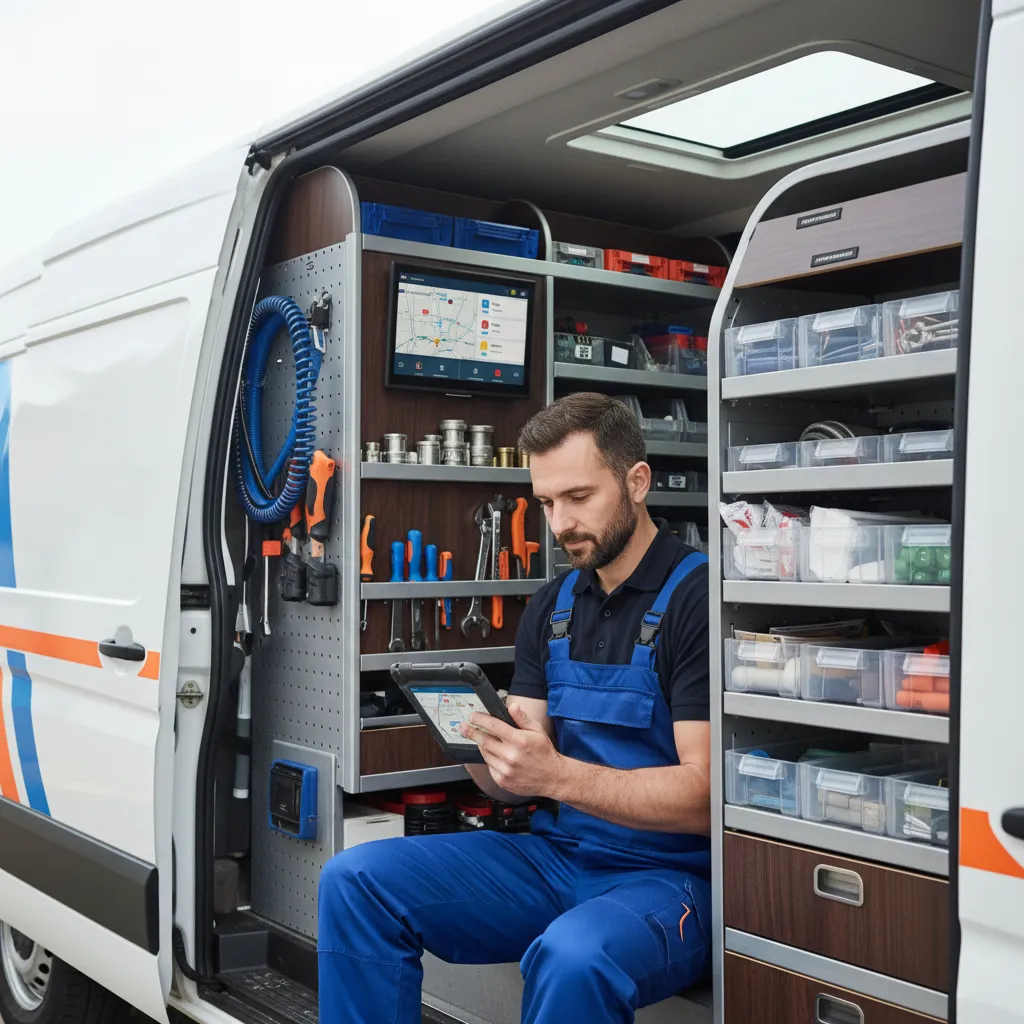
- 🔧 "Our trucks carry $40,000 in parts so we can complete most jobs same-visit."
- 🔧 "You will receive a text with your tech's name, photo, and license number 30 minutes before arrival."
- 🔧 "We guarantee our work for 2 years, not 90 days."
These are not slogans. They are operational commitments that differentiate you.
When you replace vague claims with proof:
- ✅ Perceived risk drops because the lead knows exactly what to expect.
- ✅ Price objections decrease because trust justifies premium pricing.
- ✅ Referral rate increases because customers have specific reasons to recommend you.
A Georgia shop added a "What to Expect" page to their site detailing their 7-step service process with photos and timelines. Their form conversion rate increased 22% and their average review score went from 4.3 to 4.8 stars.
Challenge: Your Marketing Generates Leads, Then Abandons Them to Your CSRs
A lead submits a form, and your marketing job is "done."
Now your CSR has to:
- • Explain pricing.
- • Qualify urgency.
- • Overcome objections.
- • Book the appointment.
Your marketing passed the hardest work downstream. Your CSR is closing cold leads instead of confirming pre-sold appointments.
This is not a training issue. It is a funnel design failure. Your marketing should be doing 70% of the sales work before the lead ever speaks to a human.
Solution: Build a Pre-Qualification Funnel That Does the Heavy Lifting
Your funnel should:
- 1️⃣ Educate on pricing structure (diagnostic fees, repair ranges).
- 2️⃣ Set urgency expectations (what happens if you wait).
- 3️⃣ Address common objections (why licensed plumbers cost more).
- 4️⃣ Collect qualifying information (issue type, budget, timeline).
By the time the lead reaches your CSR, they should be pre-sold and pre-qualified. The CSR's job is to confirm details and book, not to sell from scratch.
Example funnel sequence:
- • Ad click → Landing page with pricing ranges and urgency messaging.
- • Form submit → Confirmation page with video explaining your diagnostic process.
- • Email sequence → 3 emails over 24 hours: one explaining your warranty, one showing before/after photos, one with customer testimonials.
- • CSR call → Lead has already consumed 15 minutes of educational content.
Leads who complete this sequence convert at 68% vs 34% for leads who go straight from ad to phone call.
When you build a pre-qualification funnel:
- 🚀 CSR efficiency doubles because they are not educating from zero.
- 🚀 Close rate increases because objections are pre-handled.
- 🚀 Customer satisfaction improves because expectations are set before the conversation.
An Oregon plumbing company implemented a 4-email pre-qualification sequence. Their CSR handle time dropped from 9 minutes to 4 minutes per lead, and their close rate increased from 38% to 61%.
Challenge: You Cannot Measure What is Working Because Everything is Blended
You run Google Ads, Facebook Ads, Yelp, and Angi. Leads come in, some book, some close.
You have no idea which source produces the highest-value jobs. You are flying blind, so you keep spending equally across all channels even though one might be generating $5,000 jobs and another is generating $300 service calls.
This is not a tracking problem. It is an attribution and segmentation failure.
Solution: Tag Every Lead Source and Track to Revenue, Not Just Volume
Your CRM must track:
- 1️⃣ Lead source (Google, Facebook, Yelp, referral, etc.).
- 2️⃣ Lead quality score (urgency, budget, issue type).
- 3️⃣ Conversion outcome (booked, no-show, quoted, closed).
- 4️⃣ Job revenue (what the lead was worth).
This allows you to calculate revenue per lead by source, not just volume.
Example:
- • Google Ads: 80 leads/month, 40 jobs, $2,400 avg ticket = $96,000 revenue, $1,200 cost-per-job.
- • Facebook Ads: 120 leads/month, 35 jobs, $1,200 avg ticket = $42,000 revenue, $1,200 cost-per-job.
Same cost-per-job, but Google is generating 2.3x more revenue. Without revenue tracking, you would think Facebook is performing equally well.
When you track to revenue:
- 📊 Budget allocation improves because you fund high-value sources.
- 📊 ROI visibility increases because you see profit, not just activity.
- 📊 Capacity planning sharpens because you know which sources produce bookable jobs.
"⭐️ Dolead Expert Tip: We tag every lead with source, intent score, and timestamp so you can track performance by hour of day and day of week. Some plumbing shops see 3x higher close rates on leads generated Monday–Wednesday vs Friday–Sunday. That insight is invisible without granular tracking—and it can redirect thousands in wasted weekend ad spend."
A Michigan shop discovered their Yelp leads had a 19% close rate vs 54% for Google. They reallocated $2,800/month from Yelp to Google and increased monthly revenue by $37,000 with the same total ad spend.
Challenge: Your Marketing Metrics Look Great But Your Bank Account Disagrees
Your dashboard shows:
- • 300 leads/month.
- • $80 cost-per-lead.
- • 45% conversion rate.
Your accountant shows:
- • $24,000 ad spend.
- • $180,000 revenue.
- • $38,000 profit.
The math does not add up. You are hitting your KPIs but barely staying profitable. The issue: you are tracking vanity metrics (leads, clicks, conversion rate) instead of unit economics (profit per lead, payback period, lifetime value).
Solution: Rebuild Your Dashboard Around Profit, Not Activity
Your marketing metrics should be:
- 1️⃣ Cost-per-acquired-customer (total spend ÷ closed jobs).
- 2️⃣ Average job profit (revenue minus COGS and labor).
- 3️⃣ Payback period (how many days until the job pays for its acquisition cost).
- 4️⃣ Customer lifetime value (repeat jobs, referrals, upsells).
Example:
- • You spend $24,000 and close 90 jobs = $267 cost-per-job.
- • Average job profit is $1,200 = $108,000 total profit.
- • Payback period is 6 days (you recover acquisition cost immediately).
- • 30% of customers call back within 18 months = $32,400 in repeat revenue.
This is the real story. Your marketing is not just "generating leads"—it is returning $5.83 for every $1 spent when you include repeat business.
When you track unit economics:
- 💰 Spend decisions improve because you see true ROI.
- 💰 Capacity planning aligns because you know your profit per slot.
- 💰 Growth becomes predictable because you understand your payback curve.
A Tennessee plumbing company switched from "leads per month" to "profit per lead" as their primary KPI. They discovered their residential jobs were 4x more profitable than commercial despite commercial having higher revenue. They shifted 60% of their ad spend to residential and increased annual profit by $190,000.
10-Point Operational Audit: Plumbing Lead Pre-Framing
Use this checklist to audit your current plumbing marketing and lead intake process. Each "No" answer represents lost revenue.
- 1️⃣ Does your intake form include a budget qualifier? (e.g., "Typical repairs range $500–$3,500. Does that work?")
- 2️⃣ Do you explain your diagnostic fee structure in ad copy or landing pages?
- 3️⃣ Do your ads filter for transaction intent, not research intent? (e.g., "Same-day dispatch" vs "Learn about plumbing")
- 4️⃣ Do you send automated SMS confirmation within 2 minutes of form submission?
- 5️⃣ Can you throttle lead volume in real time based on dispatch capacity?
- 6️⃣ Do your landing pages include specific operational proof points? (e.g., "$40K in truck stock" or "2-year warranty")
- 7️⃣ Does your CRM require multi-stage qualification before a lead is marked "open"?
- 8️⃣ Do you track revenue per lead by source, not just lead volume?
- 9️⃣ Do you measure cost-per-acquired-customer and payback period, not just CPL?
- 🔟 Do you have a post-booking education sequence (email/SMS) that pre-handles objections?
If you answered "No" to more than 3 of these, your plumbing marketing is leaking profit at the intake stage. Each gap compounds downstream, resulting in wasted dispatch trips, longer sales cycles, and lower close rates.
How to Implement This Audit
Run this audit quarterly with your marketing lead, CSR manager, and dispatch coordinator in the same room. Score each item as:
- ✅ Fully implemented (documented, tracked, and optimized)
- ⚠️ Partially implemented (exists but inconsistent or unmeasured)
- ❌ Not implemented (gap that needs immediate action)
Prioritize the gaps that have the highest impact on your current bottleneck. If your no-show rate is above 25%, start with SMS confirmation. If your close rate is below 40%, start with budget qualification. If your cost-per-job is above $300, start with source-level revenue tracking.
One Pennsylvania shop ran this audit and discovered they were missing 7 of 10 items. They implemented staged qualification, SMS confirmation, and revenue tracking over 60 days. Their close rate increased from 32% to 51%, and their cost-per-job dropped from $340 to $198.
Understanding Lead Economics: Yield Per Lead vs Cost Per Lead
Most plumbing shops obsess over Cost Per Lead (CPL) but ignore Yield Per Lead (YPL). This is a catastrophic mistake.
Cost Per Lead tells you what you paid to acquire a contact. Yield Per Lead tells you what that contact was worth in closed revenue. CPL is an input metric. YPL is an outcome metric. You can have a $50 CPL and lose money, or a $150 CPL and print profit.
The Math That Matters
Let's compare two plumbing shops running different lead strategies:
Shop A: Low CPL, High Volume
- • Leads per month: 400
- • Cost per lead: $45
- • Total ad spend: $18,000
- • Close rate: 22%
- • Jobs closed: 88
- • Average ticket: $1,400
- • Total revenue: $123,200
- • Cost per acquired customer: $205
- • Yield per lead: $308
- • Return on ad spend: 6.8x
Shop B: Higher CPL, Pre-Qualified Volume
- • Leads per month: 220
- • Cost per lead: $82
- • Total ad spend: $18,040
- • Close rate: 56%
- • Jobs closed: 123
- • Average ticket: $2,100
- • Total revenue: $258,300
- • Cost per acquired customer: $147
- • Yield per lead: $1,174
- • Return on ad spend: 14.3x
Shop B spent nearly the same amount but generated $135,100 more revenue by focusing on yield instead of volume. Their CPL was 82% higher, but their profit was 2.1x greater.
Why This Happens
Shop A optimized for cheap clicks and form fills. Their ads attracted price shoppers, DIY researchers, and out-of-area leads. Their CSRs spent 60% of their time on unqualified calls. Their techs ran estimates that never closed.
Shop B optimized for buying intent. Their ads included pricing ranges, urgency filters, and diagnostic fee disclosures. Their intake forms required budget acknowledgment and issue type selection. Every lead that entered their CRM was pre-qualified and pre-educated.
The difference is not luck. It is deliberate funnel design.
How to Calculate Your Yield Per Lead
Use this formula:
YPL = (Total Closed Revenue) ÷ (Total Leads Received)
Example: You received 180 leads last month and closed $210,000 in revenue.
YPL = $210,000 ÷ 180 = $1,167 per lead
If your CPL is $90, your return is 13x. If your CPL is $150, your return is 7.8x. Both are profitable, but the first is more efficient.
Now compare YPL by source:
- • Google Ads: 60 leads, $156,000 closed = $2,600 YPL
- • Facebook Ads: 80 leads, $42,000 closed = $525 YPL
- • Yelp: 40 leads, $12,000 closed = $300 YPL
Google is generating 5x more yield per lead than Facebook and 8.7x more than Yelp. You should be spending 5x more on Google, not splitting your budget equally.
This is the insight CPL alone cannot provide. YPL exposes which sources produce closeable, high-ticket customers vs which sources produce tire-kickers and price shoppers.
The Yield Optimization Framework
To maximize YPL, focus on these three levers:
- 1️⃣ Increase close rate by pre-qualifying budget and urgency upstream.
- 2️⃣ Increase average ticket by attracting leads who value certainty over price.
- 3️⃣ Decrease cost per lead by improving ad relevance and landing page conversion.
Most shops only pull lever #3. That is why they stay stuck at 30% close rates and $1,500 tickets while spending $200+ per acquired customer.
High-yield plumbing shops pull all three levers simultaneously. They accept a higher CPL in exchange for better intent. They trade lead volume for lead quality. They optimize for profit per lead, not leads per dollar.
One Illinois shop tracked YPL for 90 days and discovered their lowest-CPL source (Facebook carousel ads) had the lowest yield ($340 YPL). They cut Facebook spend by 70%, reinvested into Google Local Services, and increased their monthly profit by $28,000 with fewer total leads.
"📌 Partner Note: Dolead tracks YPL by source, time of day, and lead behavior score, giving you visibility into which channels produce the highest-profit customers. This eliminates guesswork and prevents you from funding low-yield sources that look good on paper but bleed profit in reality."
Standard Operating Procedure: High-Yield Lead Follow-Up
Your follow-up process determines whether a qualified lead becomes a booked job or a wasted opportunity. Here is the exact SOP high-performing plumbing shops use to maximize conversion from first contact to close.
Phase 1: Immediate Confirmation (0–2 Minutes Post-Submission)
Trigger: Lead submits form or calls and reaches voicemail.
Action:
- ✅ Send automated SMS: "Hi [Name], this is [Company]. We received your request for [issue type]. A specialist will call you within 10 minutes. Save this number—it is how we will reach you."
- ✅ Send confirmation email with: (1) What to expect next, (2) Link to "What to Expect" page, (3) Diagnostic fee explanation, (4) Direct phone number.
Goal: Establish immediate contact and set expectations. Leads who receive confirmation within 2 minutes show at 87% rates vs 61% for leads who wait 20+ minutes.
Phase 2: Live Contact Attempt (2–10 Minutes Post-Submission)
Trigger: CSR sees lead in CRM.
Action:
- ✅ Call from the same number used in SMS.
- ✅ Use this script structure: "Hi [Name], this is [CSR] from [Company]. I am calling about the [issue] you reported. I have a technician available [timeframe]. Does that work?"
- ✅ If no answer: Leave voicemail referencing the SMS and email. "Hi [Name], I just tried calling about your plumbing issue. I sent you a text and email—please reply to either and I will get you scheduled immediately."
Goal: Book the appointment while urgency is high. 47% of plumbing leads book on the first call if contacted within 10 minutes.
Phase 3: Educational Sequence (10 Minutes – 24 Hours Post-Submission)
Trigger: Lead did not answer initial call.
Action:
- ✅ Send Email #1 (1 hour later): "What Happens If You Wait" – Explain the cost and damage risks of delaying plumbing repairs.
- ✅ Send Email #2 (4 hours later): "How We Work" – Detail your diagnostic process, pricing structure, and warranty.
- ✅ Send Email #3 (12 hours later): Testimonial-based email with before/after photos and verified reviews.
- ✅ Send SMS #2 (18 hours later): "Hi [Name], we still have availability today. Reply YES to confirm or call [number]."
Goal: Pre-sell the lead and address objections before the next live contact. Leads who open 2+ emails convert at 2.4x the rate of leads who receive no follow-up content.
Phase 4: Second Contact Attempt (24–48 Hours Post-Submission)
Trigger: Lead has not booked but engaged with email or SMS.
Action:
- ✅ Call again using a consultative approach: "Hi [Name], I wanted to follow up on the [issue] you reported. Have you had a chance to review the information I sent? Do you have any questions before we get you scheduled?"
- ✅ If they express budget concerns: Acknowledge and reframe. "I understand. That is why we provide upfront pricing and a written estimate before any work begins. Most customers find that knowing the exact cost before committing gives them peace of mind. Does [timeframe] work for a diagnostic visit?"
Goal: Convert warm leads who need additional assurance. 28% of plumbing leads book on the second or third contact after receiving education content.
Phase 5: Final Attempt and Archive (48–72 Hours Post-Submission)
Trigger: Lead has not responded to calls, emails, or SMS.
Action:
- ✅ Send final SMS: "Hi [Name], this is my last follow-up. If you still need help with your plumbing issue, reply HELP and I will get you scheduled. Otherwise, I will close your request. Thanks, [CSR Name]."
- ✅ If no response within 24 hours: Mark lead as "unresponsive" and remove from active pipeline.
Goal: Prevent CRM clutter and wasted follow-up time. Leads who do not respond within 72 hours convert at less than 4% and should not consume additional resources.
CRM Integration Notes
Your CRM should automate phases 1, 3, and 5. Your CSRs should only handle phases 2 and 4 (live contact attempts).
Required CRM fields:
- • Lead source
- • Issue type (leak, clog, no hot water, etc.)
- • Urgency level (emergency, same-day, within 48 hours, flexible)
- • Budget acknowledged (yes/no)
- • Contact attempt log (date, time, outcome)
- • Email open/click tracking
- • SMS response status
Shops that follow this SOP convert 54–62% of qualified leads vs the industry average of 28–35%. The difference is not better techs or lower pricing—it is systematic, multi-touch follow-up that respects the lead's decision timeline while maintaining urgency.
Why a Lead Generation Partner is the Right Solution for You
Dolead operates as an operational extension of your business, absorbing the marketing risk by delivering validated, exclusive leads on a strict pay-per-lead model.
About the Author
Guillaume Heintz is an operator-grade lead generation expert with decades of experience helping plumbing professionals scale using performance-based marketing strategies. His work focuses on eliminating waste in the lead-to-revenue funnel through pre-qualification, intent scoring, and capacity-matched lead delivery.


.svg)
.svg)
.svg)
.svg)


